Lots of people think the only way to get better at drawing is to draw more and more, as much as you can. Every day, for hours on end. But after a while, the gains you’re making start to slow down and your enthusiasm wanes. Everything starts becoming very repetitive and the burnout sets in.
But the reality is that drawing more doesn’t necessarily equal drawing faster. Drawing smarter actually speeds up the learning process. Here’s some quick tips to help you get there.
Pick one skill to work on.
Most people make the mistake of wanting to work on their proportions, shading, perspective, anatomy, style and much more, at the same time. It just makes the progress of everything a lot more slower because your attention and energy is not focused enough.
What you should try doing is focusing on one skill to work on in a practice session or week. Maybe one week you work on your proportions and another week you work on your shading. Focusing on just a certain area allows you to learn something and you’re not simply touching the surface.
Study before you draw.
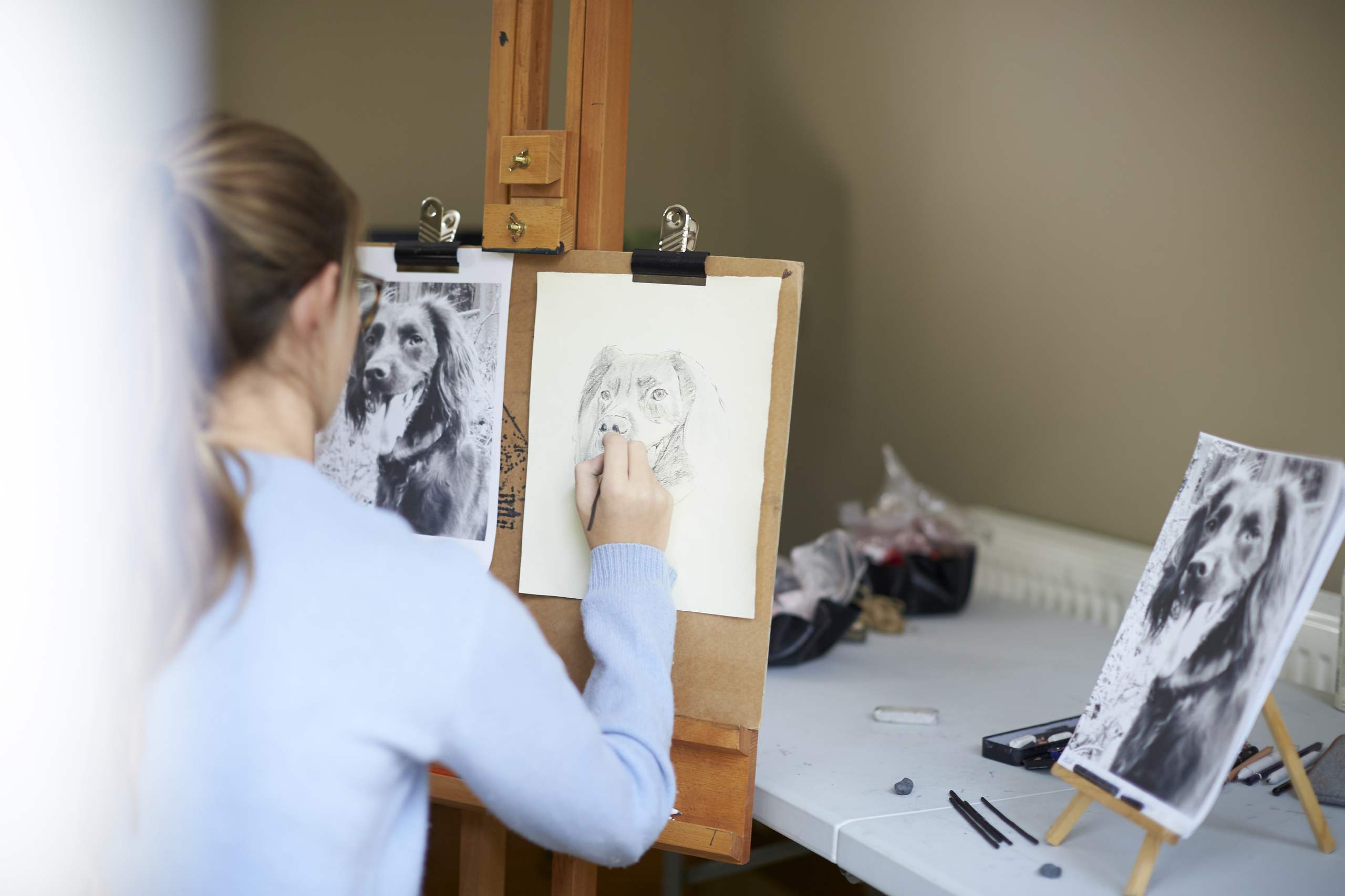
Many beginners go straight into drawing things without spending any time looking at their references, before starting to draw. However, actually looking at your reference and how the things in it connect to each other can drastically improve the quality of your result.
It just shows how the shapes in your reference are connected, what is the proportion of it or where the light is coming from. Basically it just gives you a better understanding of what you’re drawing before drawing.
It’s the difference between just training your hands and actually training your brain.
Don’t mindlessly practice.
Many times people are just mindlessly practising things over and over without thinking about why they are doing it or what they are trying to accomplish. That makes your progress a lot slower because you’re not actively trying to fix anything.
It is much more effective to take a few sketches where you’re just drawing three sketches at your topic in a way where you’re actively trying to fix a particular thing, instead of drawing ten random sketches with no real intention.
Draw with references, but learn from them.
Some people don’t use references, while others just blindly copy references. Both of these methods are detrimental and slow your progress.
A good reference is not a reference you use to recreate or replicate what is in it. Instead, it is a reference you can learn from. It’s knowing why the shadow is there, why the shape is in that proportion or how that shape is constructed.
This makes your practice into a learning session.
Take breaks.
Drawing for a long time without taking breaks makes you become less accurate at what you see. You start seeing a lot more mistakes that you just accept because you think that is normal.
Taking breaks and stepping back allows you to come back to your work and be more accurate. You will see mistakes and it will be a lot faster to correct them. That will improve the quality without putting much extra effort.
The Bottom Line
Faster improvement doesn’t come from pushing harder; it comes from focusing better. If you can just be more intentional with your practice, draw smarter and be more focused, your progress will be much more efficient and stable. Without all the exhaustion and burnout.